
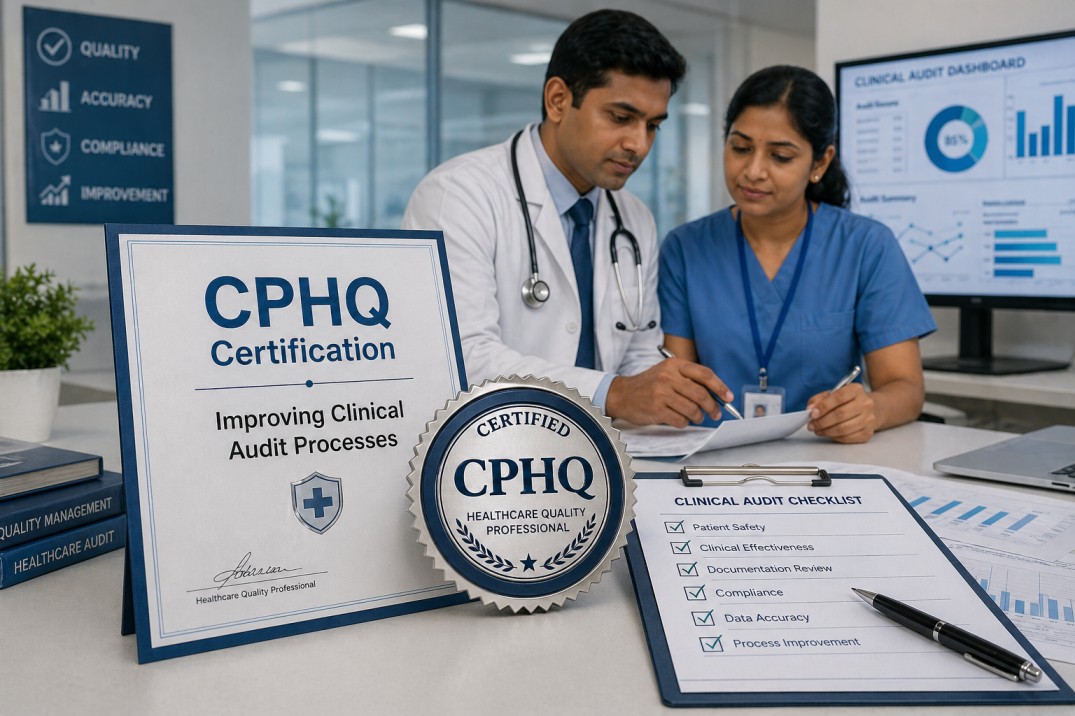
In today’s healthcare environment, maintaining high standards of patient care and safety is essential. Clinical audits play a vital role in evaluating healthcare practices, identifying gaps, and ensuring compliance with established guidelines. For professionals involved in quality improvement, earning a CPHQ certification can significantly enhance their ability to conduct and optimize clinical audit processes.
Understanding Clinical Audit Processes
Clinical audits are systematic reviews of healthcare practices against defined standards. They help organizations assess whether patients are receiving the best possible care and identify areas for improvement. However, conducting effective audits requires a deep understanding of quality management principles, data analysis, and regulatory requirements.
This is where CPHQ certification becomes valuable. It equips healthcare professionals with the knowledge and tools needed to design, implement, and evaluate clinical audits with precision and consistency.
Enhancing Audit Planning and Design
Structured planning is one of the main advantages of CPHQ certification. Professional auditors are trained on how to establish clear audit goals, distinguish measurable standards, and choose suitable methods. This will make audits comprehensive as well as being aligned with organizational objectives.
With the skills, professionals will be able to develop effective and impactful audit frameworks. An effective audit minimizes redundancy, time, and offers actionable information that leads to significant changes in patient care.
Strengthening Data Collection and Analysis
Any clinical audit is based on accurate data. The lack of information can not lead to meaningful conclusions or effective changes. CPHQ certified professionals are taught methods of data management such as data collection, validation and analysis.
These skills will allow them to discover patterns, gauge performance, and detect underlying causes of problems. This enables healthcare organizations to make evidence-based decisions that would improve quality and safety.
Ensuring Compliance and Standardization
There are stringent regulatory and accreditation requirements that healthcare organizations have to follow. The clinical audits can be used as an instrument to achieve compliance, whereas the gaps and risks can occur when inconsistency in audit is in place.
Through CPHQ certification, professionals get a complete insight into regulatory frameworks and best practices. This is knowledge that assists in standardization of the audit procedure within various departments and makes it consistent and reliable. It also reduces the chances of non-compliance which might lead to legal and financial implications.
Driving Continuous Quality Improvement
Clinical audits are not an event but an element of a continuous quality enhancement process. It is not only important to identify the issues but also to take corrective measures and even to track results.
CPHQ professionals are well-equipped to spearhead such initiatives. They are able to translate audit results into feasible improvement plans, involve stakeholders and monitor the progress made over the time. This ongoing process is that which guarantees the development and high quality of care in healthcare organizations.
Conclusion
Clinical auditing is a vital process that ought to be enhanced to provide patient-centered, safe, and effective healthcare. The CPHQ certification enables professionals to become knowledgeable to perform effective audits, process data with high accuracy, and promote constant improvement. Not only does this increase organizational performance, but also leads to improved patient outcomes and the quality of healthcare in general.
Also Read: Common Mistakes to Avoid While Taking Medical Coding Classes Online