
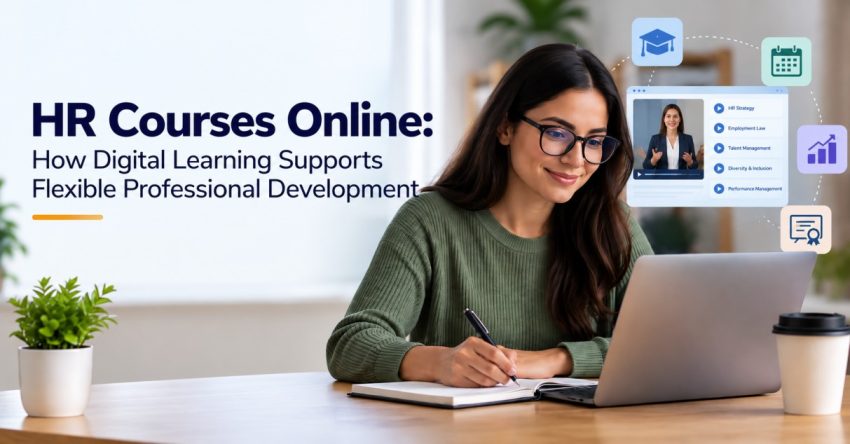
Continuing education is a part of human resource career development. HR professionals should be aware of the recruitment, employee engagement, policies and communication and changing organisational needs. Flexible learning may provide greater opportunities for professional development for those with work, education and personal responsibilities. This is where HR courses online can be of help in providing a practical learning approach.
Implementing Learning Around Existing Schedules
Flexibility is one of the significant benefits of digital learning. In a traditional classroom setting, students might have to come to class at a specific time, but working professionals may find this challenging. Online courses provide students with the opportunity to study on their own timetables.
This flexibility can help to make learning more manageable. One person might take classes in the evening and the other might opt for a shorter session of classes over the weekend. In this way, professional development can take place while not sacrificing existing roles.
Learn HR Skills that are Relevant
Human resources involves more than hiring employees. The scope of work can span from talent acquisition to employee relations, performance management, training and development, workplace communication and HR administration. An organized online program can be used to familiarize their learners with these areas and to provide them with an understanding of how HR functions relate to each other
Learners can also explore case studies, assignments, assessments or practical examples as appropriate to the course structure. These activities can be used to bring concepts into line with workplace situations and to encourage learners to think about the application of HR practices in organisations.
Support Continuous Learning
HR practices are going through a period of constant change as organisations take advantage of new technologies, workplace models and HR approaches. Professional learning is therefore an important aspect of maintaining professional knowledge up-to-date.
Online HR courses can help make ongoing learning more accessible, letting HR professionals continue to study further without needing to take a break from their work. Digital education can be used by both new and existing learners according to their knowledge and professional objectives to enhance a particular skill.
Improve Learning Accessibility
Digital learning can also level some of the “ground realities” that can come with a physical class. Learners can study at home, work or appropriate setting with Internet access. Course materials can be revisited and concepts revisited if need be.
This is a great tool for topics that relate to policies, procedures, terminology or multiple HR functions. Being able to go back to the content of the learning can help to improve understanding and more organised revision.
Select a Course that matches Career Goals
HR learners not all have same career goals. A person starting out in a career may want a general education in HR, while someone with more experience may want to build up their knowledge in a specific area such as recruitment or employee engagement/people management.
Learners should think about the course content, course length, nature of the learning, assessment and practical aspects before taking the course. It may be useful to determine if there are any career goals the program is designed for, as this can help make sure learning is relevant and meaningful.
Establishing a Career Development Plan for Flexibility
The education landscape has been transformed by digital learning, as it has transformed the approach to developing skills among professionals. HR courses online enable ongoing education despite working or other commitments, thanks to the modular approach to education.
This method of education is especially suited to established and aspiring HR specialists, who can study at their own pace.
Well-developed and executed online HR education will become an important part of ongoing career development throughout a person’s life.
Frequently Asked Questions
Also Read: How CNA Nursing Classes Build Patient Care and Communication Skills