
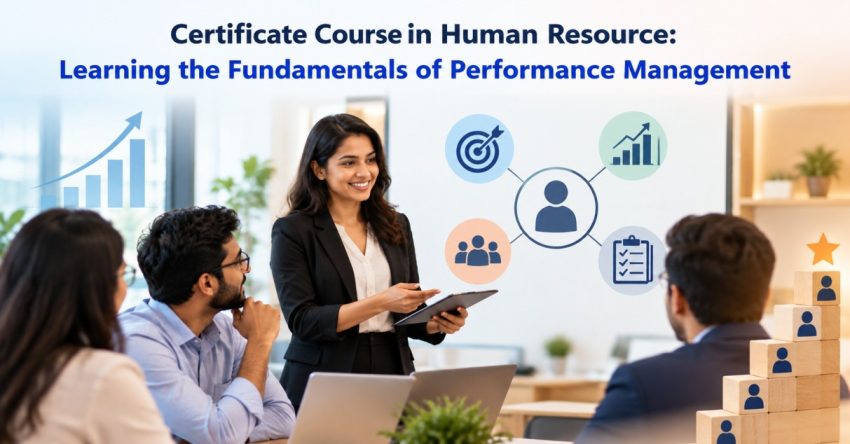
Performance management is among the important HR responsibilities that connects the role of employees to the objectives of the organization. It involves setting up the objectives, monitoring the progress, providing feedback, identifying areas of improvement and assessing the performance of the individuals in the long run. The certificate course in human resource will provide individuals with a sound understanding of all these concepts and how human resource management plays its part in proper personnel management.
Understanding Performance Expectations
Setting clear expectations is the basis of performance management. Individuals must know their roles, objectives, deadlines and performance indicators. HR will assist managers in setting objectives that match organizational objectives and are appropriate for their job roles.
Having clear expectations also allow for a more meaningful performance discussion later on as there will be a shared set of criteria to measure progress.
Establishing Well Designed Performance Objectives
Goals should be specific enough to direct employees in their work and appropriate to their roles. Organisations can employ a variety of productivity measures, quality criteria, project milestones, customer feedback, or behavioural competencies, depending on the role.
HR professionals are instrumental in supporting managers in creating a uniform goal-setting process within the teams. When the basics are learned through a certificate course in human resource, aspiring HR students will be able to understand how individual goals can relate to overall business needs.
Ensure Tracking of Student Progress Throughout the Year
An annual appraisal is not the only evaluation that determines performance management. Regular check-ins allow the managers and the employees to keep in touch and exchange information about their achievements, difficulties, changing priorities, and assistance needs.
It is also possible to discover performance problems at an earlier stage. When an employee has a specific challenge in a specific task, managers can offer guidance, resources, coaching or extra training before it becomes a bigger problem.
Giving Constructive Feedback
Feedback is one of the most important components of performance management. It should be focused on what is actually being done, and provide specific examples and suggestions for improvement.
HR teams can support managers to standardize their ways of providing feedback and ensure that performance conversations are professional and professionalizing. Positive feedback is also essential as it can encourage good practice and help to boost employee engagement when they see their efforts are successful.
To Identify Learning and Development Needs
Job evaluations can indicate a deficiency in skills and abilities. These results can be used to design training programmes, mentoring schemes, coaching sessions or to provide employees with training opportunities.
This link is vital to HR professionals. Performance management is not just about rating employees, it can also help give information for the development of the workforce and future planning of talent.
Ensuring equitable and transparent processes
Organizations should have clear, consistent performance management systems. Variations in how managers evaluate employee performance can cause confusion and impact the employee’s understanding of fairness.
HR professionals can facilitate standardized processes by creating guidelines and documentation needs, review schedules and manager training. They can also check for the existence of performance assessment procedures in line with the organizational procedures.
Developing effective HR Skills by doing
The certificate course in human resource can provide students with an understanding of how performance management relates to the overall HR function. These key elements lay the groundwork for systematic employee performance management—from setting goals to giving feedback, from planning employee development to documenting it.
If performance management is done not as an annual review, but as a continuous process, it will be easier for companies to establish clearer expectations, promote continuous improvement and link individual performance to corporate goals.
Frequently Asked Questions
Also Read: Nursing Certificate: Understanding Vital Signs and Their Role in Patient Monitoring