
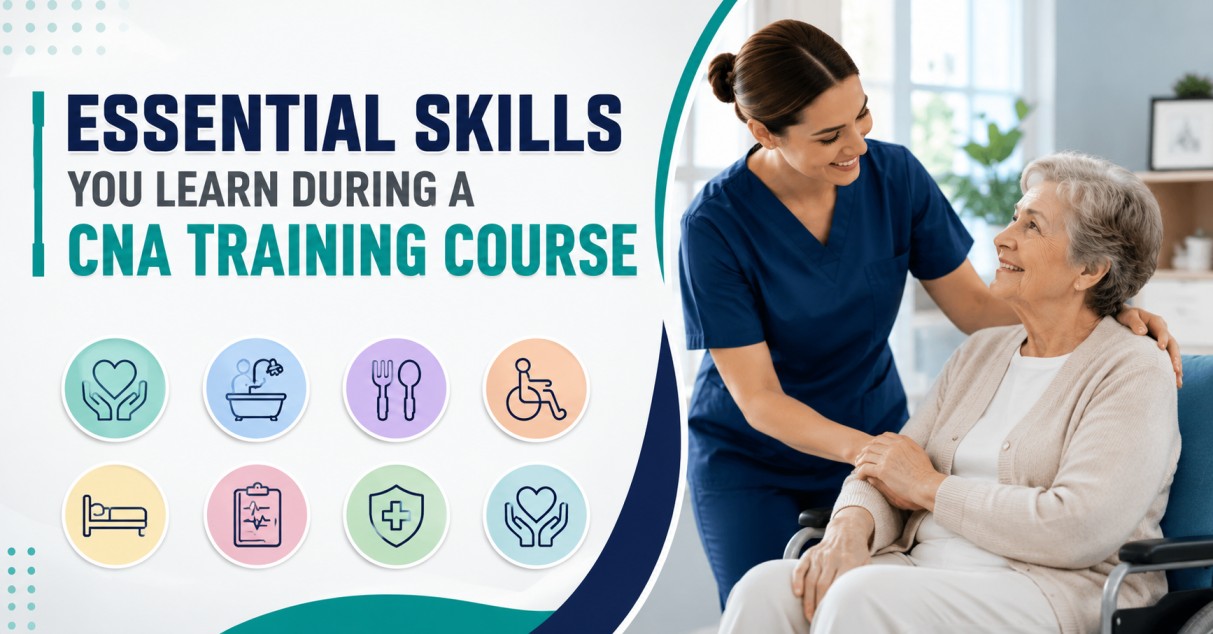
CNAs are important healthcare professionals who provide patient care services in hospitals, nursing homes, and other similar institutions where people receive medical treatment. In many cases, CNAs are the primary providers of assistance to the patients. To provide such care, it is necessary to undergo special CNA training that provides students with the necessary knowledge and skills needed to fulfill their duties successfully. The training process involves the development of professional skills and interpersonal competencies.
Patient Care Fundamentals
Among the major topics included in CNA training course, it is possible to single out the basics of patient care. The future CNAs learn how to assist patients with basic needs related to personal hygiene like bathing, dressing, grooming, feeding, and mobility. Such routine procedures can be performed incorrectly if one does not know the right techniques.
The importance of hygiene and the ability to help patients who cannot move and do things on their own independently are the key elements of the training.
Communication and Interpersonal Skills
One of the key abilities that should be developed during CNA training is effective communication with patients, their families, nurses, and other healthcare workers. Communicating effectively involves communicating politely, clearly, and sensitively.
It is clear that good communication skills help CNAs understand patient’s needs, support them emotionally and inform the healthcare workers about patient’s state. It can be said that good communication and listening skills help to improve care outcomes and satisfy patients.
Vital Signs Monitoring
CNA training courses offer students the opportunity to learn how to monitor the patient’s vital signs, such as the blood pressure, pulse rate, body temperature, and breathing. It can be considered one of the most important skills since changes in patient’s vital signs can indicate some problems in patient’s health.
CNA students learn how to work with medical equipment and document results properly. It helps CNAs assist nurses and physicians in evaluating patients’ conditions.
Infection Control and Safety Practices
One of the key roles of the healthcare setting is the prevention of infections from spreading. As part of the course, the CNA will receive an introduction to the practice of infection control and safety measures, including hand washing, personal protective equipment, and proper sanitation.
Safety practices include procedures that ensure the safety of both patients and healthcare workers. Such practices involve emergency response, fall prevention, and safe patient transfers from bed to wheelchair, etc.
Basic Medical Knowledge
CNAs are not expected to diagnose and treat any health conditions. Nevertheless, they will find useful their basic knowledge of the anatomy and physiology as well as general information about health problems. In the context of CNA education, it means getting introduced to basic healthcare terminology.
Time Management and Organization
The healthcare setting is often very dynamic, with many things going on at once. CNA training course equips students with time management and organizational skills which are necessary for the efficient performance of many duties at once. Prioritizing one’s tasks allows for patients to get proper care without compromising the standards of work provided to the patients.
This ability is especially important when CNAs provide their services to several patients during one working day.
Conclusion
A CNA training program offers all of the key skills which will ensure success in one of the most crucial jobs in the healthcare industry. Patient care, communication, infection prevention, vital signs checking – all of these are learned during the training period. Moreover, the skills developed here help CNAs make a positive impact on people’s lives every day.
Also Read: How Health Administration Courses Online Help Improve Healthcare Cost Management