
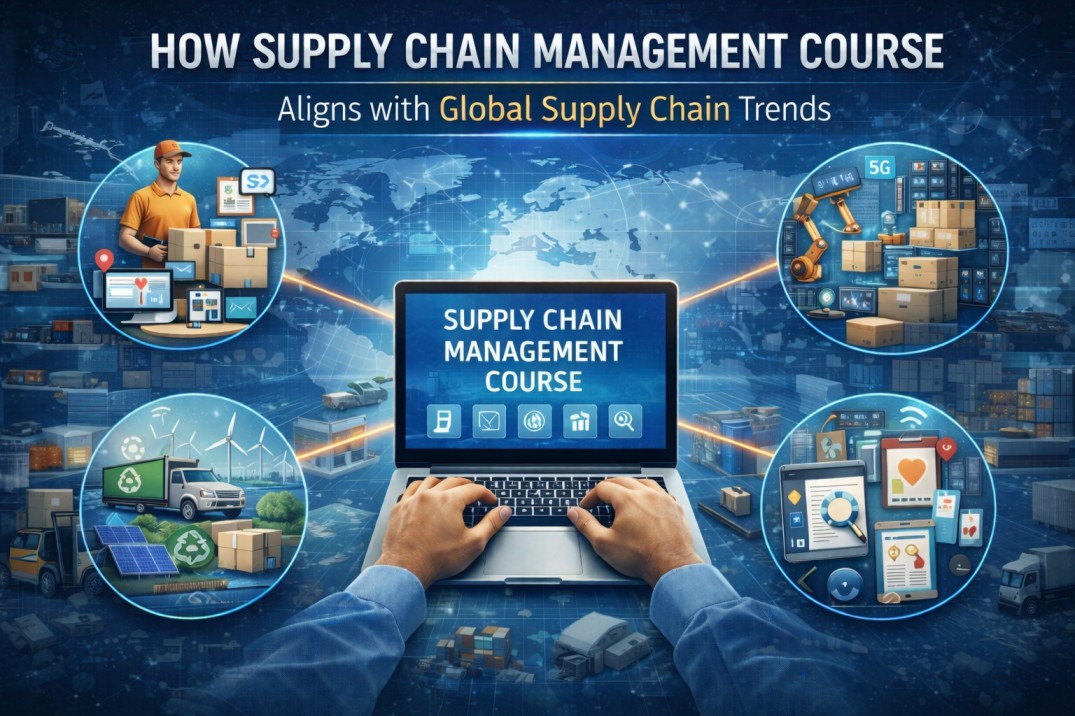
The increasing rates of globalization are transforming supply chains globally with technology, emerging consumer demands, and unforeseen disruptions. Firms are seeking individuals who are knowledgeable not only in the traditional logistic but modern global supply chain dynamics. This is where a well-organized course in supply chain management course is most applicable as it makes learning relevant to the current and the emerging trends in the world.
Increasing Supply Chain Complexity Response
The supply chains are global and consist of more than one country, one supplier, and regulations. An advanced supply chain management course assists students to comprehend the relationship that exists between international sourcing and cross-border movement as well as coordinating internationally.
Learners can learn to take on the complexity and minimize operational risks in global settings by learning through real-world supply networks.
Pay attention to Data-Driven Decision Making
A major trend in the world today is the increase in the use of data in planning and execution. A quality supply chain management course equips students with understanding on how to analyze demand information, performance metrics, and planning reports.
The skill enables the professionals to make their decisions prudently to enhance the accuracy of forecasting and prompt response to the alterations in the global demand patterns.
The digital transformation has transformed the way supply chains are conducted all over the world. An appropriate supply chain management course will introduce a learner to the concept of workflows, automation, and integrated planning.
Learning these digital practices makes professionals accustomed to tech-based jobs adjusted to them and keep in pace with the global operational requirements.
Handling Supply Chain Breakage
The world has shown the significance of resilience due to such global occurrences like pandemics, trade restrictions, and changes in geopolitics. A future-perceived supply chain management course equips the learner with the skills of planning disruptions and establishing the elastic supply networks.
Such lessons assist professionals to make backup plans, diversify supply, and sustain continuity in the turbulent times.
Focus on Responsible Practices and Sustainability
Now sustainability is not a choice in global supply chains. Several organizations have been embracing responsible sourcing and good utilization of resources. An organized course in supply chain management has discussions on green practices, waste minimization and ethical operations.
Such knowledge conform the learners to the world requirements and the business objectives in the long term.
Creating Better Teamwork in Multinational Teams
The contemporary supply chains rely on effective cooperation between regions and time zones. An effective supply chain management course provides an insight on the significance of coordination, communication, and standard processes.
Students know that collaboration and transparency enhance efficiency when it comes to global networks of suppliers and partners.
Equipping Professionals in the Global Careers
With the increase in the internationalization of the supply chains, it is increasing career opportunities beyond the local markets. A full course in supply chain management equips students with skills that they will need working globally, being flexible, and being strategic.
This matching with the world trends renders the professionals more competent and future-oriented.
Conclusion
An effective supply chain management course is relevant to modern trends in supply chain management because it pays attention to data, technology, resilience, sustainability, and teamwork. The courses reflect the real-life issues and practices in the world, which are applicable today and crucial to the future of the supply chain management.
Also Read: Key Skills You Gain from Industry-Focused Online Supply Chain Courses