
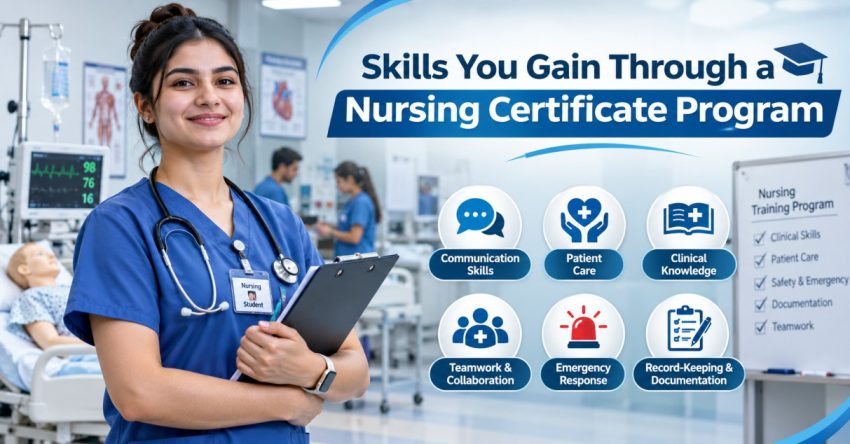
The healthcare systems are always in need of skilled nursing professionals who would provide safe and humane care. To most aspiring candidates, a nursing certificate is the initial organized process of getting into this field of reward. In addition to the theoretical application, the programs pay much attention to practical skills that equip students with real clinical settings.
An excellent nursing certificate program develops the technical and non-technical competencies. A combination of these capabilities can assist professionals in assisting physicians, treating patients and taking care of their daily medical duties with ease.
Latest Patient Care Basics
Learning the basics of patient care is one of the most significant results of a nursing certificate that a student can have. Students are conditioned to aid patients in their daily living which includes hygiene, mobility, feeding and comfort.
This education instills the sense of attention and empathy- attributes that are fundamental in the medical environment. The learners get to know how to uphold the dignity of the patients and provide effective care through the supervised practice. As time progresses, nurses who have attained a nursing certificate would be reliable support staff in hospitals and clinics as well as care homes.
Clinical and Bedside Skills
One of the biggest concerns of any nursing certificate program is practical clinical training. The students are taught the necessary bedside skills that form a daily work in the nursing profession.
These typically include:
- Monitoring vital signs
- Patient record keeping.
- Helping with simple medical practices.
- Practices in infection control.
- Wound care support
This kind of real world exposure will make sure that the learners do not get overloaded once they get into the actual healthcare setting. Hiring employers tend to select employees who have a nursing certificate due to the fact that they need minimal training and can eventually get used to clinical practices.
Knowledge of Medical Terms
Accuracy of healthcare communication is a requirement. The nursing certificate program exposes the student to the widely applied medical vocabulary, abbreviations, and documenting styles.
This information assists nursing professionals in comprehending the instructions of doctors well and keep accurate records of the patients. It also minimizes the possibility of miscommunication that is vital in medical environments. A nursing certificate will make the candidates more assured about the possibility of communicating with medical teams and processing regular records.
Protection and Prevention of Infection
The security of patients is one of the key priorities in all healthcare institutions. Students get to know the basics of hygiene, sterilization, and infection prevention through a nursing certificate.
Training usually covers:
- Hand hygiene protocols
- Wearing of the personal protective gear (PPE).
- Waste management in biomedicine.
- Basic isolation procedures
These abilities are particularly critical within the health care setting of the modern day in which infection control is a direct measure of patient outcomes. Individuals with a certificate in the field of nursing should adhere to safety measures at all times and in a responsible manner.
Interpersonal Skills and Communication
In nursing, one is not enough with technical knowledge. Professionals deal with patients, families, physicians, and administrators on a daily basis. A nursing certificate program thus gives great emphasis on the communication skills.
Students learn how to:
- Talk with nervous patients in a calm manner.
- Report patient conditions correctly.
- Collaborate effectively in healthcare teams.
- Show empathy and patience
These social skills usually define the level of patient experience. Through adequate training using a nursing certificate, the candidates gain the confidence to deal with sensitive issues in a professional manner.
Time Management and Work Discipline
The healthcare settings are stressful and high-paced. In a nursing certificate program, students are trained to be task-oriented and schedule-oriented and disciplined throughout the shifts.
They are taught on how to deal with various patient requirements without affecting the quality of care. Such an organized method of work makes certified candidates useful in a busy hospital environment where time-saving is important.
Emergency Response Skills
Basic emergency handling is also introduced to learners by many nursing certificate courses. Although they do not substitute advanced medical training, they train the candidates to act fast in emergency cases.
Students may learn:
- Basic first aid
- CPR fundamentals
- Identification of emergency symptoms.
- The steps of patient support needs to be carried out immediately.
- This preparedness boosts confidence at work and increases patient safety.
Conclusion
There is so much more than a nursing certificate program offers a qualification, but it also develops the practical and human skills necessary in the contemporary healthcare environment. The training equips the candidates with the real world duties, starting with basic patient care and clinical practice all the way to communication and safety awareness.
A nursing certificate is a good starting point to anyone who has ambitions of venturing in the healthcare industry in the shortest time possible. It prepares the future practitioner with the appropriate combination of knowledge, discipline and care to assist in providing quality care and develop consistently in the nursing profession.
Also Read: Supply Chain Management Masters Degree: Balancing Cost, Speed and Service Levels